Mount Longonot
Mount Longonot
A dormant volcano 90 km from Nairobi, Mount Longonot offers a 5-hour hike to an 1.8 km crater, with views over Lake Naivasha and the Rift Valley.
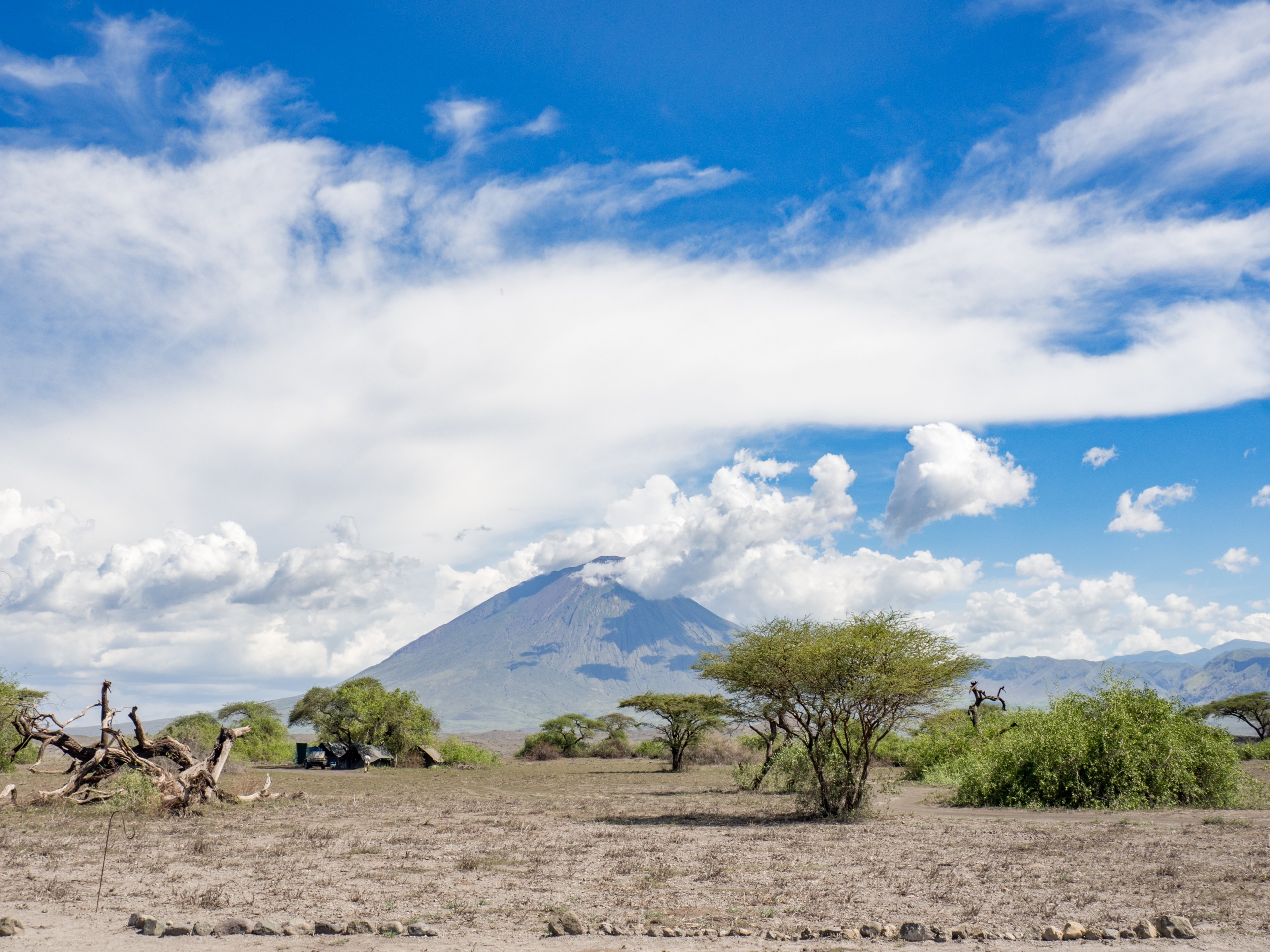
Mount Longonot rises with its distinctive conical silhouette above the Rift Valley, roughly a hundred kilometers northwest of Nairobi. This dormant volcano, whose last known eruption dates to the 1860s, shelters a summit crater of 1.8 km ringed by a panoramic trail. Its ascent ranks among the most accessible day excursions from Lake Naivasha.
Why climb Mount Longonot
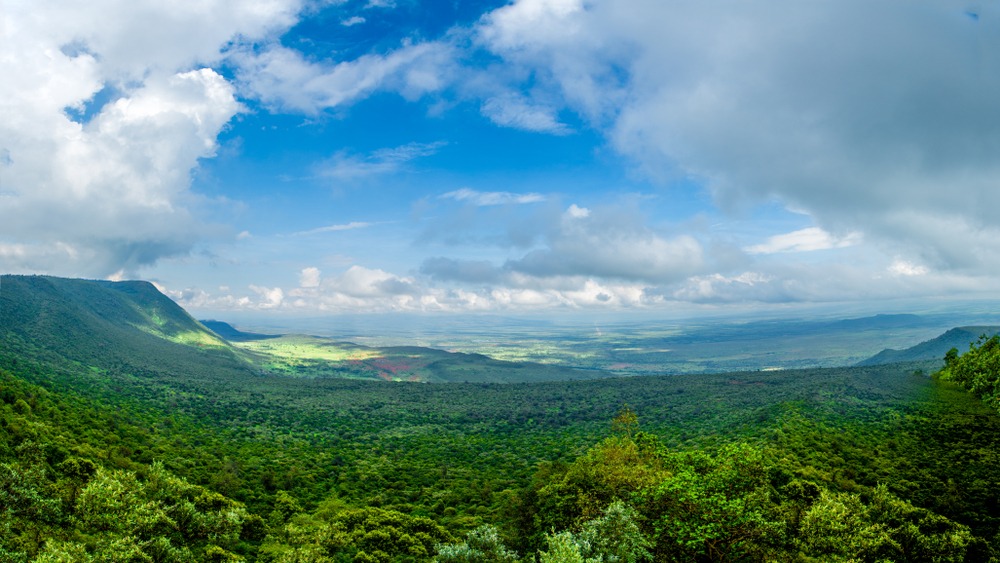
The summit offers a rare 360° view across Kenya: Lake Naivasha to the north, the Mau Escarpment to the west, the peaks of the Aberdares to the east, and the Rift Valley stretching southward. Inside the crater, dense forest grows around still-active steam vents—evidence that geothermal activity persists. The trail circling the crater rim (7.2 km) remains one of few Kenya hiking routes that lets you walk along the lip of an actual crater.
The site's appeal also stems from its proximity to other attractions in the Rift Valley Lakes region, making it easy to include in a short circuit from Nairobi.
History and geological formation
The name "Longonot" derives from the Maasai word Oloonong'ot, meaning "mountain of many steep ridges." The origin of this name becomes clear when you observe the deep ravines that scar the volcano's flanks.
The current structure results from eruptions of trachytic lava roughly 21,000 years ago, which formed a vast caldera of 8 x 12 km. The cone visible today was built inside this ancient caldera, crowned by the 1.8 km summit crater. Several satellite cones and lava flows dot its slopes. The last recorded eruption dates to the 1860s, classifying Longonot among dormant rather than extinct volcanoes.
The site is now protected by the Kenya Wildlife Service and forms part of Mount Longonot National Park.
What to see and do
The ascent to the crater rim
The trail begins behind the information center. The first section stays broad and gently graded, then the slope steepens noticeably. After around 2 km, a first false summit with a viewpoint marks a natural rest stop before the steepest section. A few built steps ease progress on passages most prone to erosion.
At the crater rim, vegetation shifts dramatically: the dense forest clothing the interior contrasts sharply with the grassy outer slopes. Count approximately 8 to 9 km round-trip for this first option, or around 5 hours including breaks.
The crater circuit
For experienced hikers, a 7.2 km trail makes a complete circuit of the rim. The true summit lies along this route and is marked by a bright orange sign. Hiking the loop counter-clockwise lets you tackle the summit climb earlier and save descents for the end. The full circuit adds several hours to your day and exposes you to both wind and sun across the entire traverse.
Mountain biking and lava flow
A 2 km bike circuit leads to a lava flow inside the park. Bikes are available for rent on-site, allowing you to combine hiking and volcanic formation exploration without extra logistics.
Wildlife and birds
The park shelters savanna wildlife accessible from the trails:
- plains zebras, giraffes, Thomson's gazelles
- buffalo, hartebeest, several antelope species
- baboons, and more rarely leopards
For birdwatchers, thermal currents above the crater attract raptors: Verreaux's eagle and the bearded vulture (lammergeier) are regularly spotted soaring overhead.
Practical information
- Difficulty: challenging hike with sustained elevation gain on the second half; good fitness required.
- Duration: approximately 5 hours for the round-trip to the crater rim; longer for the full loop.
- Gear: hiking boots with good grip, sun protection (virtually no shade), at least 2 liters of water, snacks, windbreaker for the summit.
- Entrance fees: Kenya Wildlife Service rate to be paid on-site, accepted by card or via the official KWS platform.
- Safety: trails are marked; a guide is not mandatory but recommended for less experienced hikers.
When to go
The dry season—January to March and July to October—offers the best conditions: clear skies, dry ground, and maximum visibility over Lake Naivasha, the Mau Escarpment, the Aberdares, and the Rift Valley. During the rainy seasons (April-June and November), the trail becomes slippery and mist often obscures the panoramas. An early morning start is recommended year-round to avoid the heat on exposed slopes.
How to get there
The park lies roughly 90 km from Nairobi via paved road. By private vehicle, the journey typically takes 1.5 to 2.5 hours depending on traffic leaving the capital. Using public transport—getting off at Longonot village then taking a motorbike taxi to the park entrance—stretches the trip to several hours. Most visitors combine the hike with a stay at Lake Naivasha, located about twenty minutes' drive away.
Nearby attractions
Mount Longonot sits within a cluster of sites accessible from Naivasha:
- the Crescent Island sanctuary, a Naivasha lake peninsula where wildlife can be observed on foot
- the Aberdare National Park, at higher altitude, to extend your circuit toward the highlands
- the Chyulu Hills National Park, another recent volcanic formation in the country
- the Giraffe Centre in Nairobi, a classic stop before or after the excursion
Frequently asked questions
Frequently asked questions
The hike is short but demanding. The first half climbs steadily; the second half grows steep with some rocky sections. Good physical condition is necessary, though no technical climbing skills are required.
Allow approximately 5 hours for the round-trip to the crater rim, and a full day if you add the crater circuit (7.2 km extra).
A guide is not required—the trail is clearly marked. One is recommended, however, for hikers unfamiliar with high-altitude trekking or those wishing to identify wildlife.
It is a dormant volcano. Its last known eruption occurred in the 1860s, and steam vents remain visible along the crater walls—a sign of residual geothermal activity.
Yes, the 90 km of paved road make a same-day return possible by private vehicle. Many travelers prefer to spend a night at Lake Naivasha for an early departure, however.
Planning your trip
A Mount Longonot hike fits smoothly into an itinerary combining the Rift Valley, the Naivasha lakes, and southern Kenya's wildlife parks. To build a custom circuit including this stop, explore our Kenya journeys.
Interested in this visit?
We can include it in your personalised itinerary.