Safari in Kenya: Our tips for a successful excursion!
A safari requires careful planning. Choosing which parks to visit, pacing your journey, selecting the ideal season, understanding local wildlife and safety rules
A safari cannot be left to chance. Choosing the parks to visit, pacing your journey, the ideal season, knowledge of local wildlife and safety rules: whether you travel independently or with a driver-guide, an excursion into the heart of wild life requires thorough preparation! Here are 8 tips for a successful safari in Kenya.
1. Choosing the right safari…
There are several types of excursions available for a Kenya safari. None is better than another: it all depends on what you expect from this experience!
Kenya safari on your own (self-drive)
Self-drive is a formula that gives safarists complete freedom. With no set itinerary and no constraints other than park opening and closing times, it offers a true sense of adventure.
In exchange? An independent safari requires careful planning beforehand. To fully enjoy the experience, you'll need to manage (before and during your trip):
Accommodation reservations,
Vehicle rental,
General logistics (transfers between parks, route planning, meals, etc.).
Purchasing entrance tickets (you can pay the entry fee once there, but it's recommended to pay in advance to facilitate access on the day). Don't hesitate to check national park prices on the official Kenya Wildlife Service (KWS) website.
Note that Kenya is a vast territory where distances between parks can be significant. For example, from the Nairobi National Park, you'll need to drive 3 hours 50 minutes to Amboseli park or 3 hours 30 minutes to Lake Nakuru. If you want to explore several sites: plan your route well before your trip.
Which vehicle should you rent for a Kenya safari? Although roads and tracks are generally passable in Kenya, it's advisable to rent a 4x4 or SUV-type vehicle (such as a Toyota Landcruiser) for a safari. For a self-drive, it can be worthwhile to opt for a vehicle equipped with an integrated roof tent, which transforms your transport into a nomadic camping adventure. |
Safari with a driver-guide
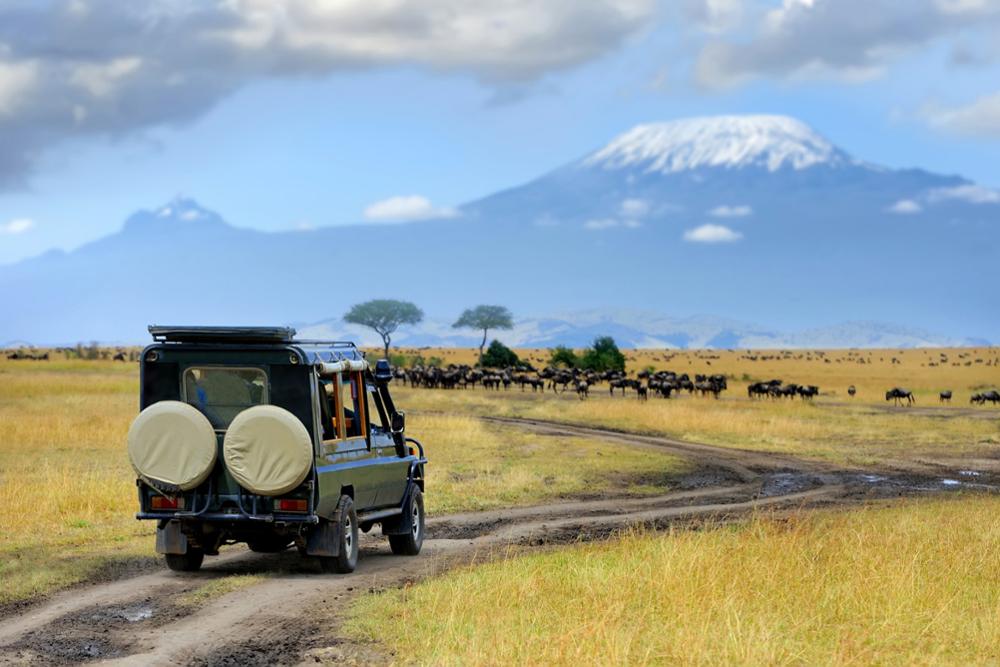
While a guided safari is more structured (and less synonymous with adventure than a solo safari), an excursion with a driver-guide has many advantages. Beyond relieving you of driving duties, you'll likely spot more wildlife alongside one!
Why? Your driver's trained eye but also radio communications with other guides, which keeps him updated in real-time about animal sightings in certain areas of the park. Furthermore, a guide allows you to learn more about local wildlife and culture.
A "game-drive with a driver" can be done in small groups (with other safarists) or as a private safari (only with your family or friends). The latter option is more flexible due to fewer constraints, but more costly.
Family trip to Kenya: beach and safari Traveling with children requires an adapted pace: it's difficult for them to stay focused and observe animals all day! To satisfy both young and old, we've designed a family camping safari circuit. On the agenda? Visits to several reserves and a stop at Tiwi Beach for swimming or water sports… |
Safaris off the beaten path
Safari doesn't necessarily mean "4x4 excursion"! Indeed, it's also possible to discover wildlife in different ways:
Walking safari: these are guided hikes (and/or multi-day expeditions). This immersive experience is notably offered at Hell's Gate National Park and in the surroundings of Masai Mara (not inside the park).
Bird-watching safari: with over 1,000 species on its territory, Kenya is an ideal destination for observing rare or migratory birds. Guided safaris allow you to admire these inhabitants of the savanna, less well-known than mammals, but equally important in Kenya's ecosystem.
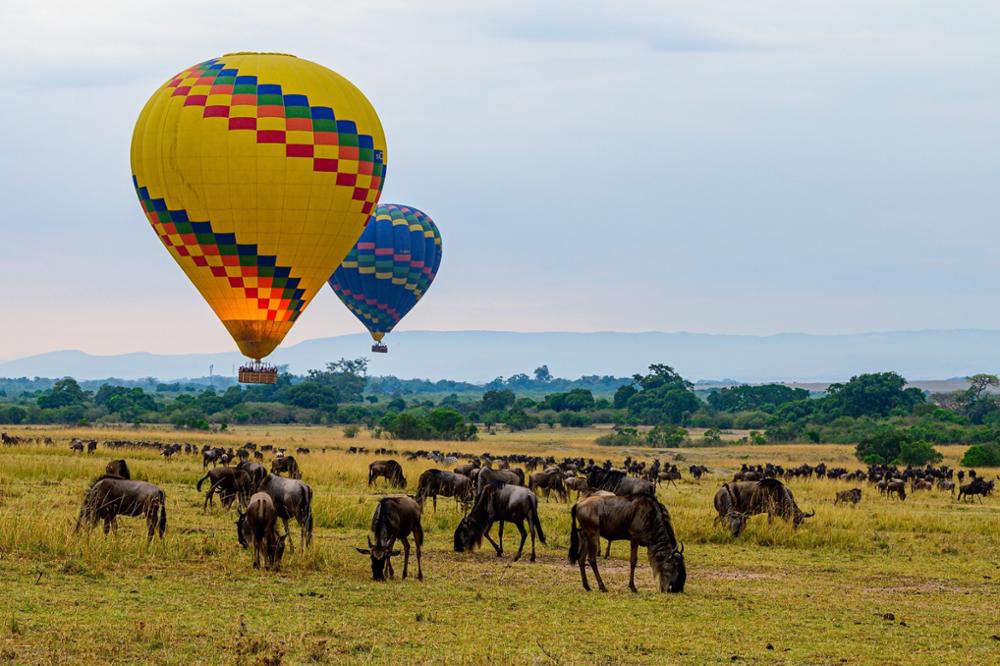
"Hot air balloon" safari: unusual and thrilling, this type of excursion allows you to observe wildlife from another perspective (and also witness sunrise or sunset…). In high season, these safaris are highly sought after. Allow 1-1.5 hours of flight time.
2. Avoid express safaris (trying to visit as many parks as possible).
To hope to see as much wildlife as possible, it can be tempting to chain together park visits. Yet this is a bad idea. A safari is above all an immersive experience, which requires time – and patience! – because animals aren't always visible at first glance.
If your itinerary is too packed, you'll have your eyes on the clock and be less attentive. To truly enjoy a safari, you need to research the size of parks and the time required to explore them; to know where to go for your Kenya safari.
Some parks, like Nairobi, require only a day visit, while others, like Masai Mara National Reserve, require 3 to 4 days on-site. For a complete and well-paced safari? Discover our Kenya full safari circuit spread over 9 days.
3. Don't focus solely on the Big Five
Kenya has several parks where you can observe all five members of the Big Five – the elephant, rhinoceros, lion, leopard and buffalo:
Masai Mara National Reserve,
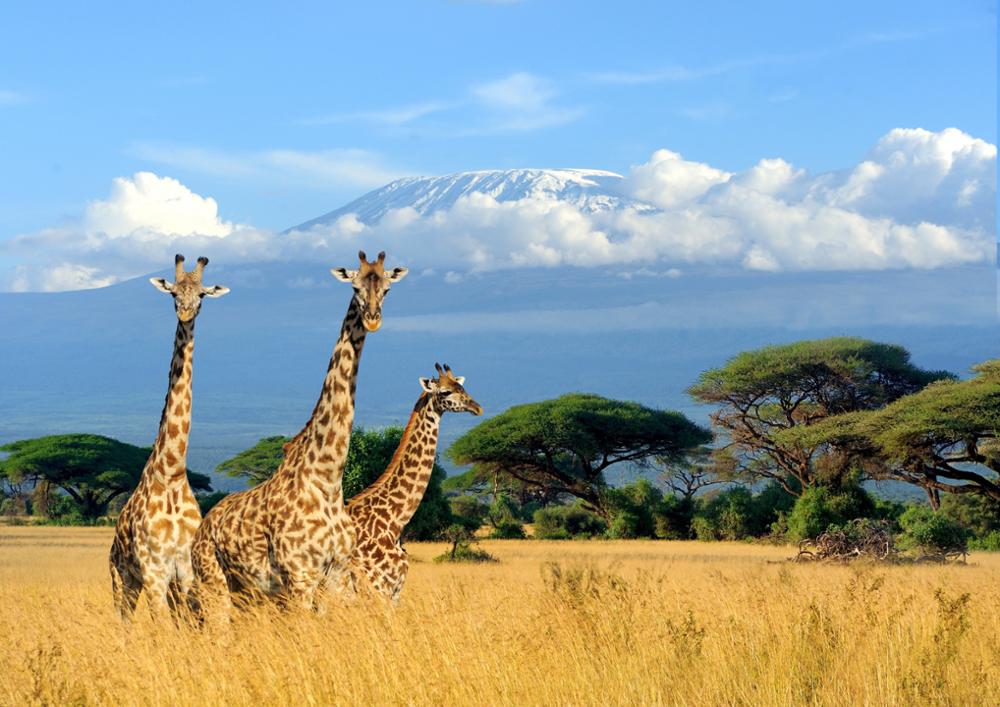
Amboseli National Park, recognized as a UNESCO Biosphere Reserve where you can see Mount Kilimanjaro (located in Tanzania).
Tsavo National Park.
However, don't focus all your attention on these five animals!
First, because you're not guaranteed to see them 100% (for example, the black rhinoceros remains discreet in Masai Mara National Reserve, just as the leopard in Amboseli Park). Second, because Kenya is a natural habitat for many other animals, which would be a shame not to discover, including:
ostriches,
crocodiles,
flamingos,
gazelles,
giraffes,
wildebeest,
cranes,
cheetahs,
herons,
sacred ibises,
impalas,
oryxes,
zebras,
4. Choose the right time for you
The best time of year
With pleasant temperatures year-round (averaging 25°C), Kenya is an ideal destination in all seasons for a safari. Each period has its advantages and disadvantages:
Wildlife visibility that varies more or less depending on vegetation density (for example, during the dry season, animals cluster massively around water points, while dry, short grass makes them quite easy to spot).
Roads that are more or less passable depending on weather.
More or less crowding in the parks depending on tourist seasons.
Unmissable events, such as the great migration in Kenya or the gathering of flamingos on the shores of Lake Nakuru (between November and May).
What matters is what you want to experience and discover, independent of seasons or weather (especially since these can vary at the same time depending on the region).
To avoid missing any essential events for you, research important wildlife dates well in advance.
Affordable safari in Kenya: our tips for saving money ● Book flights in advance ● Choose the least-visited parks and reserves ● Travel in low season or shoulder season ● Travel with others or opt for a group safari ● Stay in a camp ● Stay outside the parks and reserves ● Use a travel agency (as they often have preferential rates for lodges and wildlife excursions). |
The best time of day
Depending on when it's conducted, a safari also offers a different experience.
Morning safari: in the morning, some animals are returning from their night hunts, while others are waking up and beginning to move about. A morning excursion allows you to witness fairly intense activity and enjoy beautiful savanna light. Another advantage? Cooler temperatures, ideal for people sensitive to heat and sun.
Night safari: in late afternoon (from 7 pm to 9 pm), tourist traffic begins to diminish. There are fewer vehicles and calm returns as the sun sets on the horizon… Of course, you'll see fewer specimens, but in return, you'll hear them much more!
All these sounds allow you to discover animal life in a different way… Night safaris are often organized in private reserves near Masai Mara National Reserve (but not inside it).
5. Pack your travel bag properly for a safari
Plan appropriate clothing
A safari's success also depends on choosing the right clothing. Even if this might seem minor: appropriate attire is essential! During the dry season, avoid synthetic fabrics that promote sweating and opt for breathable materials like cotton or linen.
Also avoid black (which retains heat) as well as bright colors that might attract animals' attention. Also prioritize long sleeves and pants to protect your skin from sun, dust and insects.
To know In Kenya, military-style clothing, such as fatigues, is prohibited for civilians. According to the Penal Code, an "unauthorized uniform" is considered an offense. |
Be well-equipped
In addition to appropriate clothing, remember to bring:
A first aid kit (to keep in the vehicle),
Sunscreen (SPF 50) and lip balm to avoid sunburn,
UV-blocking sunglasses,
A cap,
A scarf (to protect your nose and mouth in case of dust),
A mosquito repellent (particularly useful during the rainy season),
A bottle of mineral water (or purification tablets, as water isn't always potable),
A good pair of closed hiking shoes (for the safari) and a second pair for the evening.
A warm jacket (even in summer, as nighttime temperatures can drop about ten degrees, especially in high-altitude areas).
A swimsuit (if your lodge or camp is equipped with a pool).
What type of bag should you choose for a safari? Some safari agencies don't accept hard suitcases or wheeled bags as they're too cumbersome (and difficult to secure on a 4×4's roof). It's therefore advisable to opt for a soft travel bag (but still large enough to easily transport your equipment (water, camera, sunscreen, etc.). |
6. Respect safari rules and wildlife
During a safari, observing animals must be done with respect for wildlife and the guidelines specific to each park, including:
Staying on designated trails (don't venture off-track),
Drive slowly (30 km/h) both for your safety and to increase your chances of seeing animals,
Don't exit the vehicle,
Don't feed animals to attract them and see them up close,
Leave no litter in nature,
Don't pick plants,
Be discreet (speak quietly, don't play music, don't honk),
Don't smoke outside designated areas.
Don't use your camera's flash to avoid frightening animals,
What type of camera do you need for photographing animals? To succeed with your wildlife shots, prioritize a camera with a fairly powerful burst mode, as well as a long focal length and zoom of around 300 mm (or even 400 mm for birds). An ND filter can also be useful to avoid overexposure. Don't forget to bring your protective case to preserve your equipment in case of rain or dust. |
7. Research vaccinations, health risks and insurance
Vaccinations and health risks
Before heading on safari in Kenya, it's essential to be properly vaccinated. According to the French Ministry of Europe and Foreign Affairs, it's recommended that you:
Get vaccinated against yellow fever and bacterial meningitis A + C + Y + W135.
Check that mandatory French vaccinations are up-to-date, such as DTP - diphtheria-tetanus-poliomyelitis (as well as rubella, mumps and measles in children).
You should also research health risks and diseases that can be contracted in Kenya to know which preventive measures to take. The main endemic diseases are:
Malaria is transmitted by mosquitoes. The risk of bites is quite high in the evening and at night. Remember to apply protection and keep it with you always.
Chikungunya is a disease transmitted by infected mosquitoes. It's recognizable by its flu-like symptoms (muscle pain, fever, etc.).
Dengue is another disease caused by a virus transmitted by an Aedes-type mosquito. Symptoms are similar to the flu and can be accompanied by rashes.
Insurance
While travel insurance isn't mandatory when traveling to Kenya, it's highly recommended. In case of illness or accident, it will cover medical expenses incurred there and lets you travel with peace of mind.
8. Don't overlook local culture
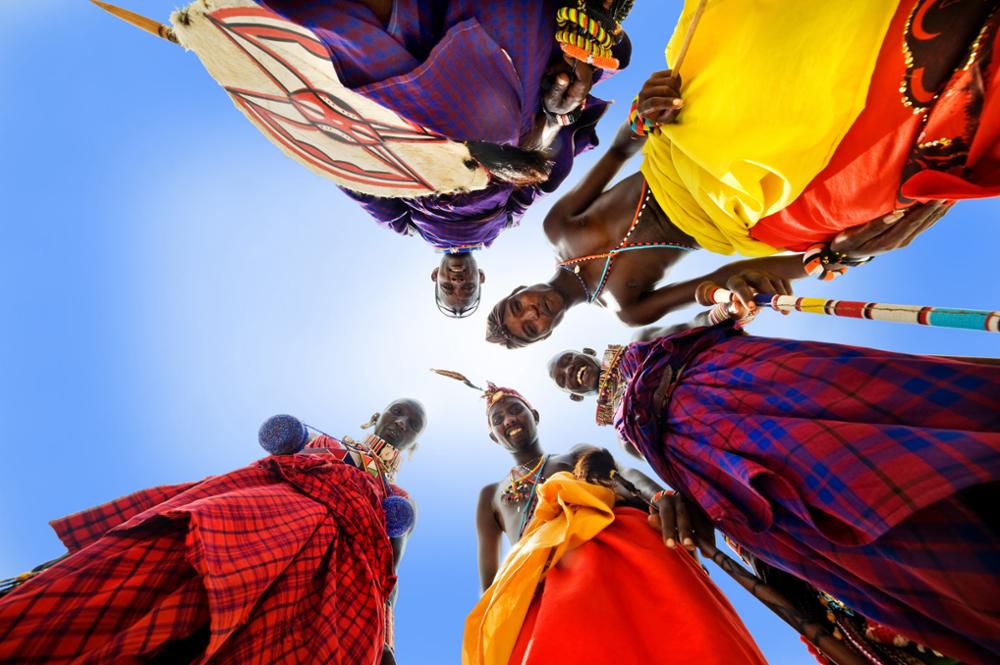
Finally, a safari in Kenya isn't limited to observing animals. It's an experience that also allows you to discover local culture. Some circuits, such as our trek-safari in Maasai country, allow you to meet local communities and discover their way of life (visiting a school, cattle herding, etc.).
One last tip: be wary of "fake ethnic villages" designed solely to satisfy tourists – where no one speaks Swahili (Kenya's official language).
Frequently Asked Questions
Can you do a safari alone in Kenya?
Yes, it's possible to do a safari alone in Kenya, but this means planning your itinerary carefully beforehand. You need to know which parks have the animals you want to see, manage all logistics yourself and drive your own 4x4. Without using an agency, a safari therefore requires significant personal organization. In return, you have complete freedom of movement and can adapt the program to your wishes once there.
Where should you go for a safari in Kenya?
Choosing a safari depends primarily on which animals you want to see. Indeed, endemic animals aren't necessarily visible in all parks, while certain species, very specific, are the stars of certain sites, such as red elephants (Tsavo National Park), flamingos (Lake Nakuru National Park), reticulated giraffes (Samburu National Reserve), the Big Five (Amboseli National Park and Masai Mara National Reserve).
Are there dangers to traveling in Kenya?
Due to political instability, the French Ministry of Europe and Foreign Affairs recommends great vigilance when traveling to Kenya. On the health side, ensure you're up-to-date with vaccinations given the risks of endemic diseases. Finally, avoid ostentatious signs (smartphones, jewelry, etc.) to avoid drawing attention.
Frequently asked questions
The ideal duration for a Kenya safari depends on which parks you want to visit. Plan at least 7 to 10 days to explore 2 to 3 parks properly. Masai Mara National Reserve alone requires 3 to 4 days, while Nairobi Park can be visited in a day. Avoid express safaris that detract from the quality of the experience.
The great wildebeest migration in Kenya takes place mainly between July and October, when herds cross the Mara River from Tanzania into Masai Mara National Reserve. The river crossing is considered the most spectacular moment. Book well in advance as high season is very popular.
Yes, French citizens must obtain an electronic travel authorization (eTA) before traveling to Kenya. This is done online through the Kenyan government's official portal. It's advisable to apply several weeks before departure. Also check that your passport is valid for at least 6 months after your intended return date.
A Kenya safari budget varies widely depending on the formula chosen. For self-drive, plan around €175 per day for a 4x4 rental, to which you add park entrance fees, accommodation and meals. A guided safari in a comfortable lodge can exceed €300 to €500 per day all-inclusive. To reduce costs, travel in low season, opt for camping or join a group.
The Big Five include the elephant, lion, leopard, buffalo and rhinoceros. You can observe them in Masai Mara National Reserve, Amboseli National Park and Tsavo National Park. Note that some species like the black rhinoceros or leopard are discreet and difficult to spot. Be patient and don't focus solely on these five animals to fully enjoy Kenya's wildlife richness.