Umoja Village in Kenya: A Closer Look at this Matriarchal Society in Samburu County
Umoja is a matriarchal village located in northern Kenya, in Samburu County. Co-created by Rebecca Lolosoli, a Kenyan woman who survived rape and domestic violence
Umoja is a matriarchal village located in northern Kenya, in Samburu County. Co-created by Rebecca Lolosoli, a Kenyan woman who survived rape and domestic violence, this place is a refuge for women and young girls who have fled patriarchal violence or forced marriage. Visiting Umoja allows you to immerse yourself in the culture of its inhabitants, while also supporting their resilience, independence, and economy.
The History of Umoja Village in Kenya
Where is Umoja Village Located?
Umoja village is located in northern Kenya near the small town of Archers Post, just a few kilometers from Samburu National Reserve. The village women come from the Samburu tribe, which represents less than 2% of Kenya's population. In this patriarchal society, very young girls are forced into marriage with men much older than themselves and rarely have access to education.
The Genesis of the Village: Violence Suffered by Samburu Women
Hundreds of Samburu women reported being raped between 1970 and 2003 by British soldiers stationed in Kenya during military training operations. Following these assaults, many were rejected by their husbands; as they were considered soiled and dishonored. Beaten, repudiated, and without resources, about fifteen of these survivors decided to found Umoja village – which means "unity" in Swahili.
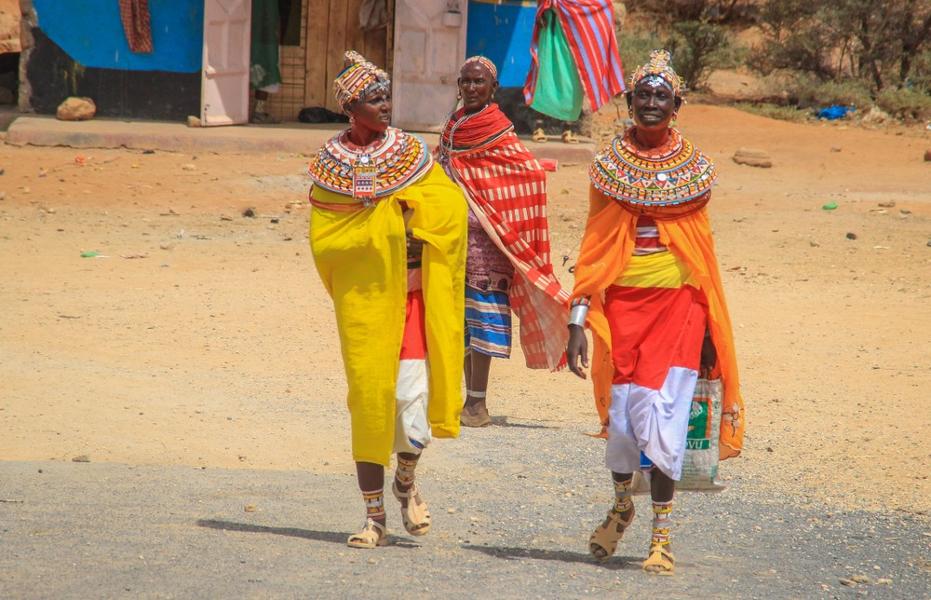
A Closer Look at the Samburu Population The Samburus are an East African population concentrated in central Kenya. Often likened to the Maasai tribe, they remain a distinct ethnic group with their own customs and traditions. Samburus live primarily from herding (cattle, goats, sheep) – in their culture, animals are synonymous with wealth. The transition to adulthood for boys is marked by a public circumcision ceremony, which elevates them to the rank of Moran warrior. After this ceremony, they live apart from the village for a time, during which they learn the responsibilities of their new status. |
The Creation of Umoja in the 1990s
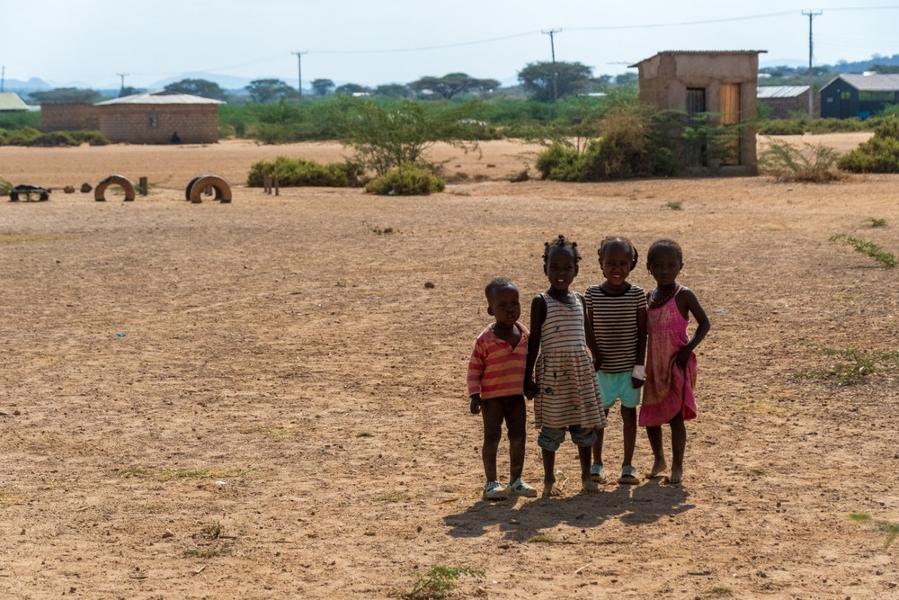
In 1990, a small group of Samburu women, led by Rebecca Lolosoli, founded Umoja village. This place is exclusively reserved for women and their children – only boys under 18 are admitted. The village is located near the town of Archers Post (less than four kilometers away), allowing inhabitants to call the police in case of danger.
Initially, Umoja meets a vital need: offering refuge to those fleeing female genital mutilation, forced marriages, domestic violence, or rape. In their highly patriarchal tribe, women are often victims of violence for trivial reasons – such as standing in front of their husbands, which is forbidden in their culture.
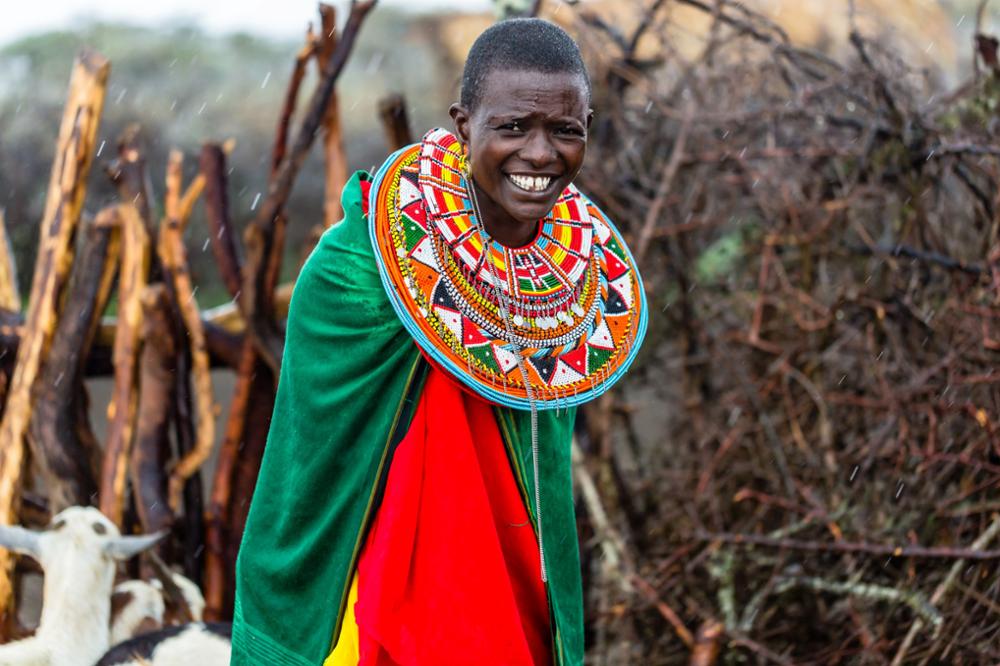
Umoja village consists of about twenty huts made from branches and wattle (a mixture of straw, earth, and cow dung). This matriarchal refuge is also protected by a thorny enclosure to prevent any intrusion.
Its Evolution
At the beginning of the village's construction, Samburu men mocked the project, convinced that women could not survive without them. Yet Umoja gradually established itself as a symbol of resilience and female independence, and the village has continued to grow over the decades...
Since its founding, it has continued to welcome new residents, particularly young women fleeing forced marriages. Jane Nolmongen, one of the first fifteen inhabitants, still lives in the village. She works there and raises her children alongside her friends. In thirty years, the village has grown from about fifteen women to fifty families.
Life in the Village
At Umoja, mutual aid and solidarity remain the pillars of the community. And, although there is no established social model or hierarchy: Rebecca Lolosoli remains their figure of authority. Only "male tourists" have the right to enter the village enclosure. Indeed, while the women of Umoja sometimes have lovers, these relationships are only permitted outside the refuge.
Female genital mutilation is not practiced at Umoja and young women are, of course, not promised to forced marriages. For their part, boys are raised with respect for women and help with household tasks.
Occasionally, meetings are organized within the village to discuss AIDS prevention and gender equality. On these occasions, women from neighboring villages are invited.
The Village Economy
Jewelry
The women of Umoja support their families primarily through jewelry making. They create necklaces and bracelets that they then sell to tourists within the village, or through their official online shop:
https://umojajewellery.com/shop/
The goal of Umoja Jewellery is to enable these women to increase their income, improve their living standards, educate their children, and emancipate future generations from patriarchal traditions. Despite their history, Umoja jewelry reflects Samburu culture, featuring motifs and traditional colors linked to their tribe.
Land Cultivation
To ensure their autonomy, the inhabitants of Umoja have also learned to work the land and engage in activities traditionally reserved for men, such as herding.
The Village's Tourism Activity
Village visits also generate additional income. The money received from tourism is given to the village matriarch, who then distributes it among families based on the number of children.
Part of the revenue is also set aside to finance children's school education, particularly that of young girls; to strengthen the future autonomy of women raised at Umoja...
Jealous Husbands Resenting Umoja's Success
Since the village's founding, its inhabitants have faced hostility and jealousy from men. At first, some husbands camped near the village to spy on their former wives and attempt to reclaim them by force…
Over time, the jealousy of some husbands intensified in the face of the village's economic success; which attracts many tourists. In the past, some men even attempted to found a patriarchal village nearby, hoping to rival Umoja!
Driven by resentment, others have launched attacks against the village and its founder Rebecca Lolosoli. Tensions persist today: men continue to target inhabitants to intimidate them.
Furthermore, their anger reignited when the women of Umoja obtained land deeds from the government. Facing repeated assaults, the village's residents had to call on Maasai warriors to ensure their protection.
In August 2009, Umoja was attacked by an armed man: it was Fabiano David Lolosoli, Rebecca's former husband… The women present that day were forced to temporarily abandon their homes, as the assailant searched for his ex-wife (who was absent during the assault).
A Closer Look at the Maasai People The Maasai people of Kenya are a semi-nomadic tribe of warriors and herders. During your visit, you can meet them for a complete immersion into Kenyan culture. Be aware, however, that there are fake villages created to satisfy tourists seeking folklore. Don't hesitate to contact our agency for advice to avoid tourist traps. |
How to Visit Umoja Village in Kenya?
What to Expect?
Access to Umoja village is subject to an entrance fee of 1000 Kenyan shillings (approximately €7 per person). Once inside, you can discover traditional huts and a kindergarten, as well as life within the refuge and the inhabitants' way of life.
During your visit, you can also attend a meeting in the napoo (the house where women gather to make important community decisions together) and visit the jewelry-making workshop.
Upon request, it is also possible to attend a "special Samburu evening": a dinner with a show of traditional songs and dances around a campfire. Note that the village also has a small museum tracing the history of the Samburu people and the founding of Umoja village.
Where to Stay in Umoja?
If you wish to stay overnight, you have two accommodation options:
Stay within the village itself, in a traditional hut at Umoja Camping – dedicated to tourists. It is recommended to book in advance on the official siteor.ke via email. Count approximately €33 for a single bed.
Sleep at Umoja Camp safari camp, located about 400 meters from the village entrance. The accommodation is quite basic, but well-equipped, with a nice view of the Ewaso Ng'iro river.
Portrait of Rebecca Lolosoli, Umoja's Founder
Her Origins and Past
Rebecca Lolosoli was born in 1962 in the village of Wamba – approximately 310 kilometers from Nairobi – into a family of six children. She began her education at Wamba girls' primary school, but had to interrupt her studies before completing her schooling – a sad reality reflecting the difficulties girls face in accessing education in this region.
Driven by a desire to learn and train, she enrolled a few years later in a Catholic training center to become a nurse. Again, her journey was interrupted, this time for financial reasons.
At 18, Rebecca married Fabiano David Lolosoli (with a dowry of 17 cows, following local traditions). Her early marriage was not a smooth path: when she is assaulted and raped by British military personnel in the 1990s, her husband does not intervene.
Her Emancipation at Umoja
Faced with this lack of support, she decides to leave her husband. In 1990, Rebecca co-founds the exclusively female village of Umoja where women can live freely and safely. This village quickly becomes a renowned refuge – and a symbol of resistance against the violence and social constraints imposed on women.
In 1995, the inhabitants of Umoja recognized Rebecca Lolosoli's leadership qualities and she was elected President of Maendeleo Ya Wanawake, a Kenyan organization dedicated to promoting women's rights and gender equality.
Founded in 1952 by a group of European women and attached to the Ministry of Community Development and Rehabilitation: this organization is a major player in Kenya's feminist movement. Rebecca held this position for ten years; consolidating her influence and commitment to women's empowerment.
Her International Recognition
In 2005, her involvement takes on an international dimension as she participates in a United Nations conference in New York. Just before her departure, she receives death threats from men in her region…
Over time, Rebecca's work continues to be recognized and celebrated. In 2010, she receives the Vital Voices Fern Holland Global Leadership Award, as well as the GR8! Women Award, which celebrates strong women working to promote women's rights and gender equality.
Despite the threats and repeated attacks she faces, Rebecca continues to defend women's rights and fight against patriarchal violence, as well as all cultural practices that affect their health, safety, and well-being.
Rebecca Lolosoli Continues Her Journey…
Today, Rebecca Lolosoli continues her commitment by meeting journalists, students, and tourists and participating in international seminars on women's and indigenous peoples' rights. Rebecca is frequently sought after in the United States, Europe, and South Africa, allowing her to raise awareness among a wide audience about the issues facing women in Kenya.
Umoja's co-founder knows that nothing is yet settled and insists that the road to gender equality is still long... She deplores, for example, that in her community, women do not yet possess the same rights as men and denounces these deeply entrenched inequalities.
Despite these obstacles, Rebecca remains confident and sees in her leadership, as well as in the strength of Umoja's women, the foundations for lasting change..
The Tumai Matriarchal Village, Following in Umoja's Footsteps.
Its Founding
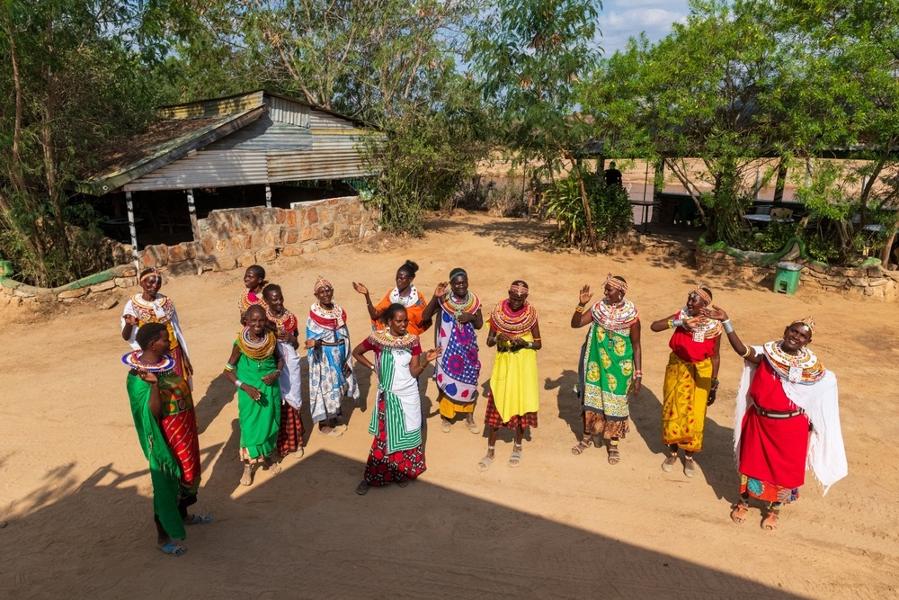
Tumai village was founded by Béatrice Chili Lenamunyi (nicknamed Chili), a former Umoja resident. Inspired by the experience of this pioneering village, she wanted to offer other women a safe space to live freely, away from the yoke of men and the constraints imposed by their patriarchal system.
This place represents a space of freedom where the inhabitants live in self-sufficiency and perform tasks that, in Samburu culture, are traditionally reserved for men. For example, they alone herd goats, hunt, and build their village's huts themselves.
Alongside these activities, they perpetuate sacred customs and cultural practices, normally exercised by men… For example, once a month, they travel to the mountains to practice an ancient Samburu ritual. Dressed in their traditional clothing, they pour goat's milk into the sacred river while singing, to invoke rain or ask the heavens to protect their livestock.
Its Evolution
Since 2001, the women of Tumai have chosen to build a real democratic system. All important decisions, whether concerning daily life or projects engaging all inhabitants, are now subject to debate and then voted on by a show of hands, by majority.
The integration of new residents follows specific criteria: each candidate must be divorced, and their boys can only join the village if they are under 16 years old, after which they must leave.
Tumai village also enforces strict health and social rules: female genital mutilation is prohibited, and sexual relations, as in Umoja, are only permitted outside the village.
Finally, Tumai is part of a broader emancipation movement. Indeed, other women's villages have emerged in the wake of Umoja and Tumai in Kenya; adopting the model of female autonomy and governance.
Frequently Asked Questions
Who is the Founder of Umoja Village?
The founder of Umoja is a woman: Rebecca Lolosoli. "Dishonored" and repudiated by her husband after being raped by British military personnel, she creates, with about fifteen other rejected women, this matriarchal refuge. Since 1990, Umoja village has welcomed Kenyan women fleeing physical and sexual violence from their husbands.
Is Kenya Patriarchal or Matriarchal?
Kenya is a very patriarchal country in rural areas, where girls and boys receive very different education based on their gender. Women have little say and are often victims of violence and abuse. For these reasons, Kenya has several matriarchal villages exclusively reserved for women and boys under 18. Fortunately, patriarchy is much less pronounced in urban areas.
Frequently asked questions
Umoja village is located near Archers Post, in Samburu County, approximately 300 km north of Nairobi. You can reach the area by car (approximately 4 to 5 hours), by bus, or by combining the visit with a safari in the nearby Samburu National Reserve. It is advisable to go through a specialized travel agency to organize the trip.
Access to Umoja village is subject to an entrance fee of 1000 Kenyan shillings, approximately €7 per person. If you wish to stay overnight in a traditional hut at Umoja Camping, count approximately €33 for a single bed. A safari camp is also available 400 meters from the village for more comfort.
Yes, male tourists can enter Umoja village as visitors. However, only boys under 18 can permanently reside there with their mother. The village is primarily a refuge reserved for women and their children.
The best time to visit Samburu County and Umoja village is the dry season, from July to October and from January to February. During these months, roads are more passable and wildlife is easier to observe in the nearby Samburu Reserve, allowing you to combine both visits.
Yes, Umoja women sell their traditional Samburu jewelry (necklaces, bracelets) directly online through their official shop umojajewellery.com. Purchasing their creations is an excellent way to support the village economy and the empowerment of its inhabitants, even without visiting in person.
The Samburus are an East African population concentrated in central and northern Kenya, representing less than 2% of Kenya's population. Often confused with the Maasai, they constitute a distinct ethnic group with their own way of life based primarily on herding. Their society is traditionally highly patriarchal, with practices such as early marriage for girls.